Best AnswersAI Alternatives in 2026: Top AI Study Tools
By Mindgrasp|Mindgrasp blog|January 5, 2026
AI study tools have transformed the way students and professionals approach learning.Instead of spending hours on notes, re-reading textbooks, or making flashcards, AI platforms can help. They provide explanations, create quizzes, summarize content, and even chat with users in real time. For students, this means faster comprehension, more efficient study sessions, and the ability to tackle complex material with guidance.
AnswersAI has become popular as a tool for quick explanations and homework assistance. It allows users to input questions or problems and receive fast, concise answers. This can be very helpful when time is limited or when a student wants to check a solution. For many, it provides immediate clarity and reduces frustration during study sessions.
However, as more learners rely on AI for academic success, limitations in AnswersAI become apparent. The platform primarily focuses on providing answers rather than supporting structured study, comprehension, or retention. Users often find themselves repeatedly consulting AnswersAI for similar questions, without developing long-term understanding. In addition, AnswersAI lacks integrated note-taking, flashcards, quizzes, or any system for organizing material, which are critical components of effective studying.
These limitations have led students to search for AnswersAI alternatives that go beyond one-off answers. The best alternatives not only provide explanations but also structure study materials, reinforce understanding, and improve long-term retention. In this guide, we explore the top options for students and professionals who want more than just a quick answer.
1. Mindgrasp — The Most Complete AnswersAI Alternative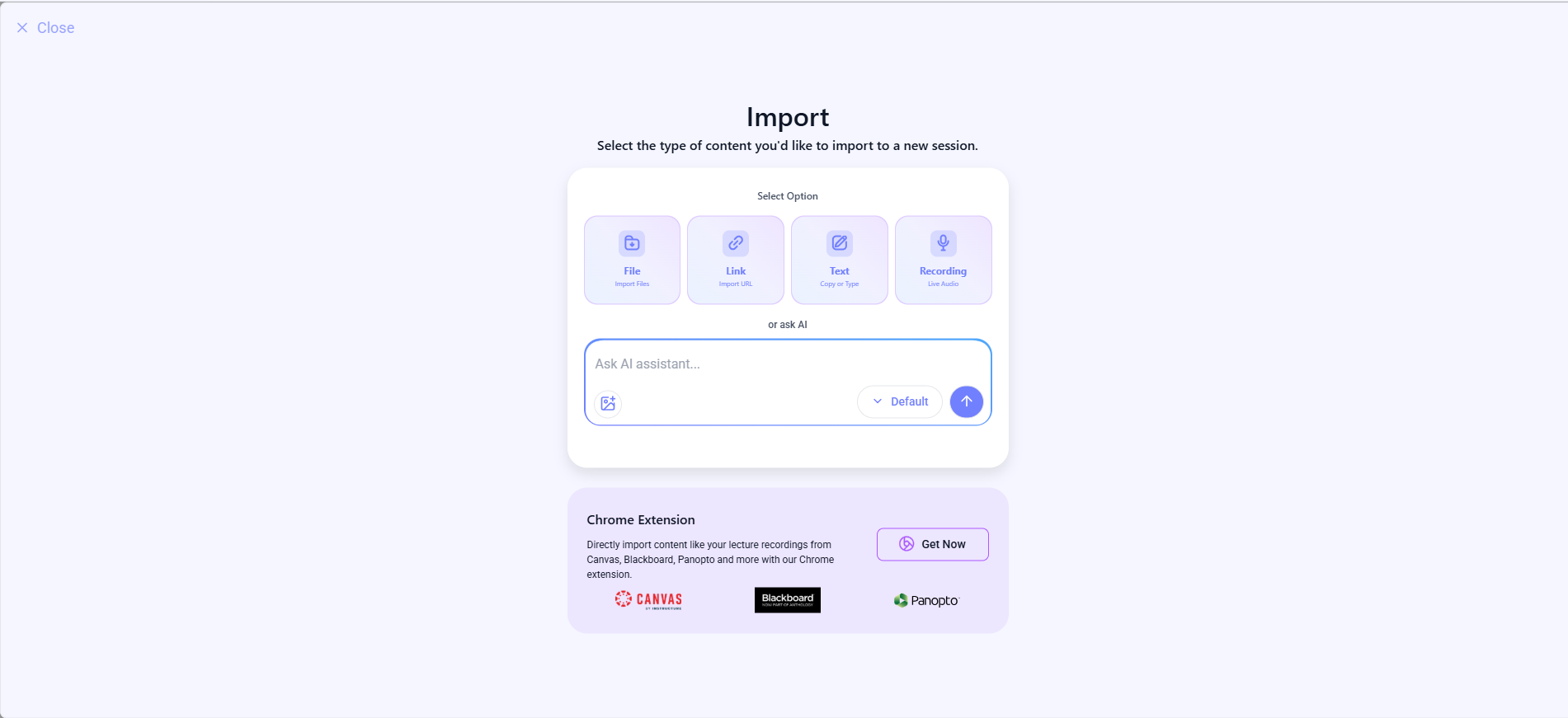
Mindgrasp is a better alternative to AnswersAI. It looks at the whole learning process, not just question-and-answer sessions. Unlike AnswersAI, which responds reactively, Mindgrasp proactively transforms raw study material into structured, interactive learning experiences.
Multi-format content support
Students can upload PDFs, lecture slides, research papers, recorded lectures, and videos. Mindgrasp consolidates these diverse materials into one environment, allowing learners to study seamlessly without switching between multiple apps. This is especially useful for courses that include different types of content, like STEM subjects or professional certifications.
Structured notes for deeper comprehension
Rather than providing a single condensed answer, Mindgrasp organizes material into logically structured notes. Related concepts are grouped, definitions are highlighted, and key ideas are linked together. This helps students internalize content more effectively than relying on isolated answers. It also reduces cognitive overload, making it easier to grasp complex topics.
Flashcards and quizzes for active recall
Mindgrasp automatically generates flashcards and quizzes from uploaded materials. Active recall through these tools is scientifically proven to enhance memory retention and long-term understanding. By practicing with questions derived directly from their own content, students reinforce learning in a way that static answers cannot provide.
Context-aware AI tutor
One of Mindgrasp’s standout features is its AI tutor. Students can ask follow-up questions directly tied to their materials. Unlike generic AI responses, Mindgrasp’s answers are contextual and specific, guiding learners through difficult concepts and filling in knowledge gaps. This approach simulates working with a personal tutor and allows learners to explore topics in depth.
Designed for long-term retention
Mindgrasp is built for sustained learning. Structured notes, quizzes, flashcards, and contextual Q&A encourage repeated engagement with material. This approach helps learners understand content better over time. Mindgrasp is more effective for exams, projects, and skill development than tools that only give quick answers.
Best for:
Students and professionals who need a complete study system with interactive learning, multi-format support, and long-term retention.
2. Quizlet — Repetition and Memorization Specialist
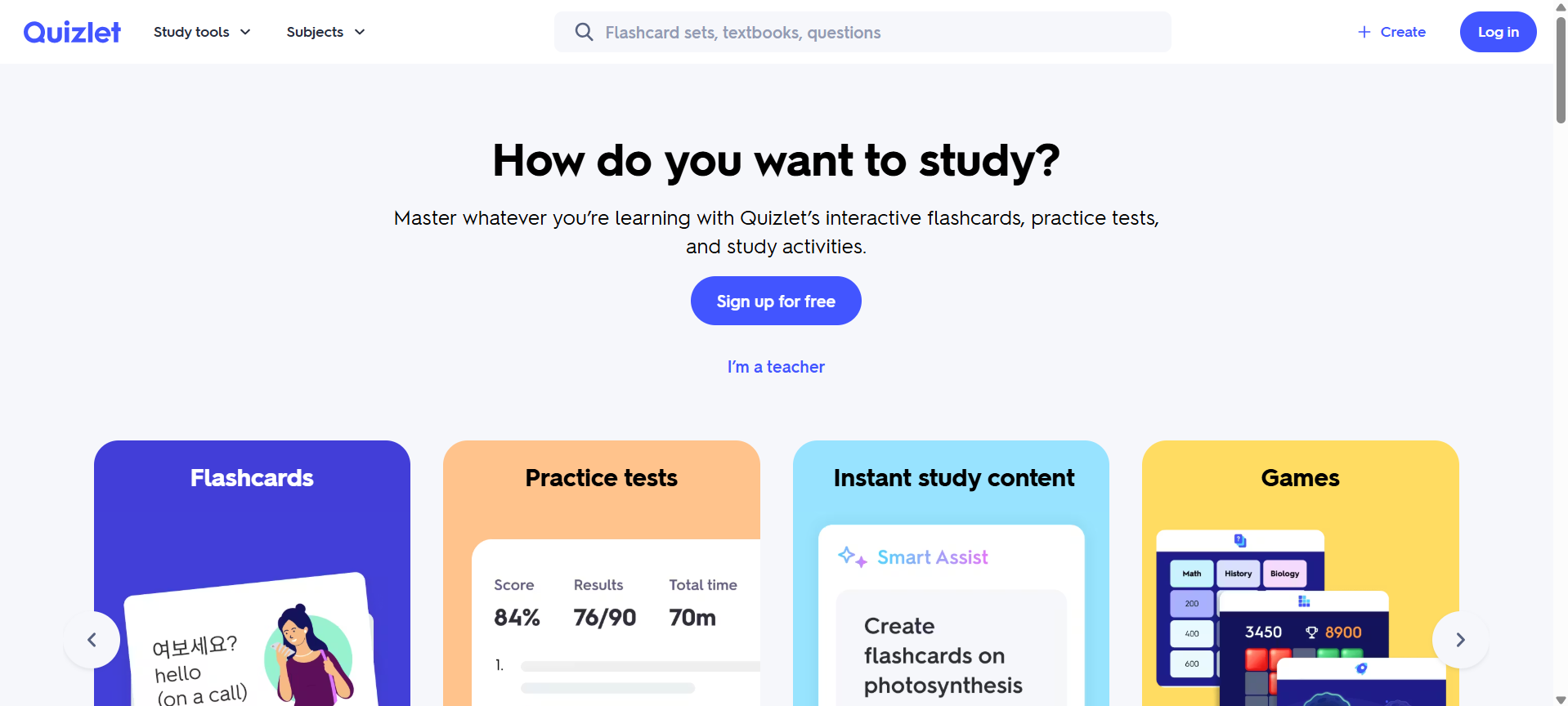
Quizlet is a long-standing alternative for students who want repetition-based learning. It excels at flashcards, allowing students to memorize definitions, vocabulary, and basic concepts efficiently. With AI enhancements, Quizlet can now generate practice quizzes and study sets from uploaded notes, which reduces manual creation time.
While Quizlet is effective for memorization, it does not provide contextual explanations tied to a student’s own materials. Users may find it insufficient for subjects requiring deep conceptual understanding. Additionally, Quizlet relies heavily on user-generated content, which can vary in quality.
Practical example: A student preparing for a biology exam can create or access shared flashcards on cellular structures. Quizlet’s learn mode and spaced repetition help reinforce memory, but for understanding complex biochemical processes, additional tools may be needed.
Best for:
Students who prioritize memorization and repeated practice for foundational knowledge.
3. Chegg — Step-by-Step Solutions for Homework
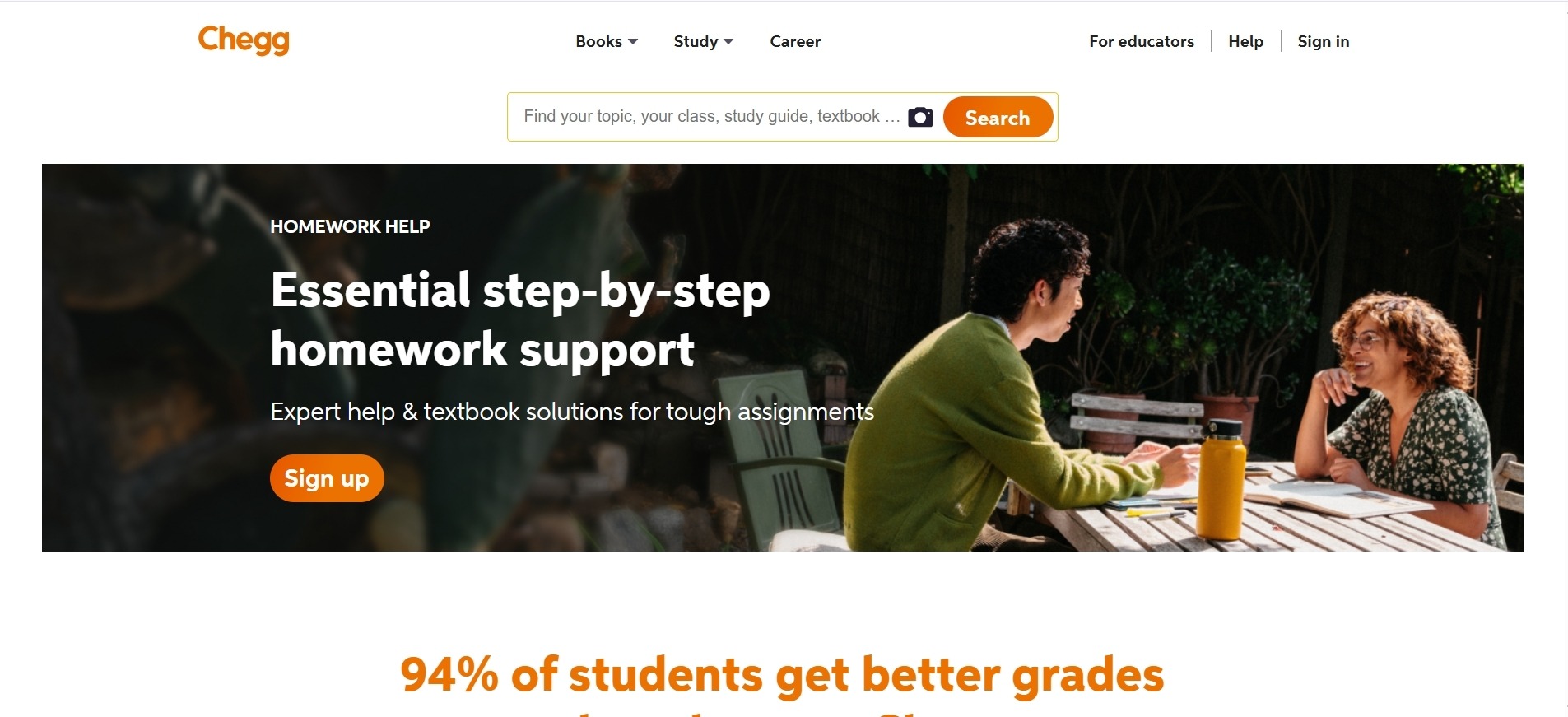
Chegg has been a staple for students seeking step-by-step homework help. Its AI capabilities now allow for quicker explanations and context-aware answers. Chegg is excellent when students struggle with specific assignments or want detailed walkthroughs of problems.
However, Chegg is not designed as a comprehensive study tool. It lacks note-taking features, interactive quizzes, and tools for long-term retention. Over-reliance on Chegg can result in students understanding how to solve a problem without grasping underlying concepts.
Practical example: A calculus student can use Chegg to check homework solutions and understand the methodology, but they will still need separate tools for creating flashcards or organizing study materials.
Best for:
Students who need step-by-step explanations for homework rather than structured long-term study.
4. Socratic by Google — Visual Problem Solving Made Easy
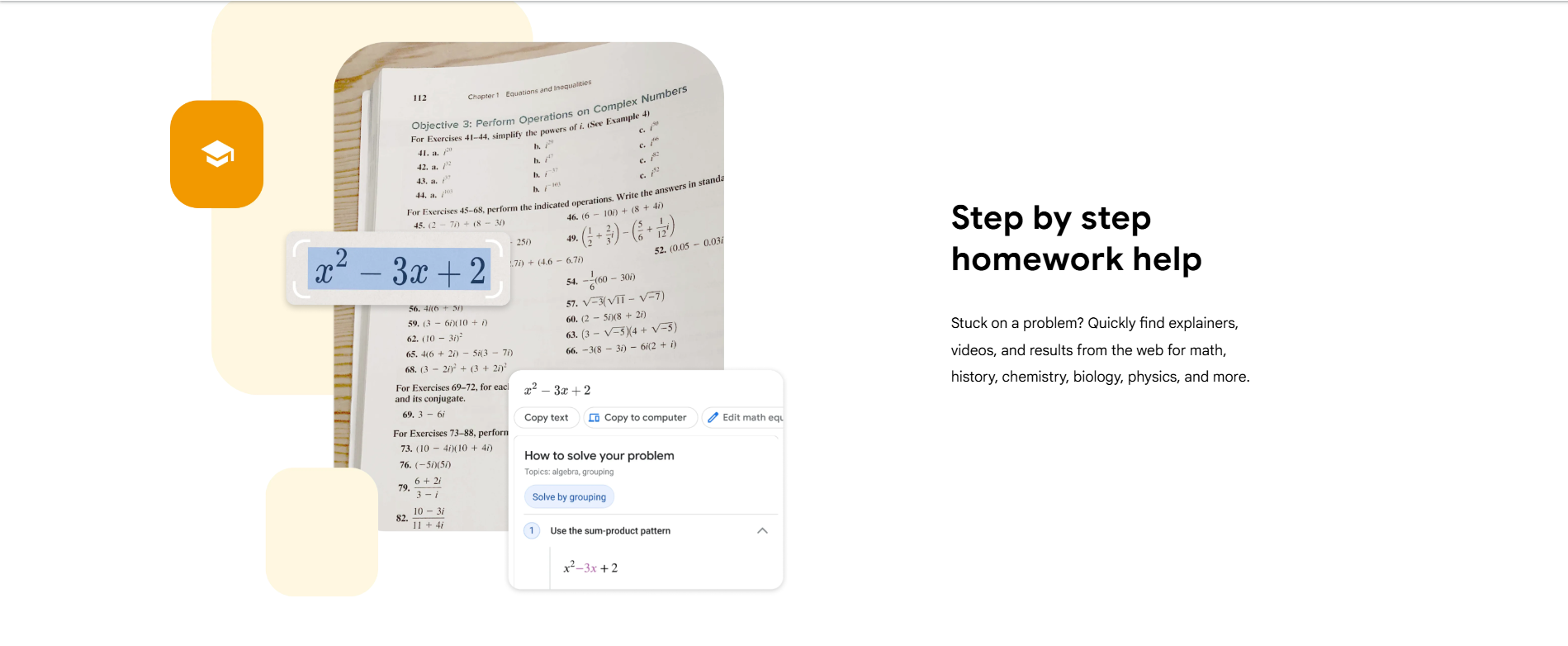 Socratic is ideal for students who need visual or problem-based learning. By taking a photo of a question, users can receive step-by-step explanations, often supplemented with diagrams or videos. Socratic is especially helpful for STEM subjects where visualization clarifies processes.
Despite its strength in immediate clarification, Socratic does not support note organization, quizzes, or structured review. It is best used alongside other tools that provide active recall and retention strategies.
Practical example: A student struggling with a physics problem can take a picture and get a clear explanation of the solution, but will need Mindgrasp or Quizlet to reinforce concepts over time.
Best for:
Visual learners and quick homework problem clarification.
5. YouLearn AI — Conversational Learning
YouLearn AI emphasizes interactive conversation. Students ask questions in a chat format and receive answers in real time. This flexible interface makes it easy to explore concepts, brainstorm ideas, or clarify doubts.
However, YouLearn AI lacks integrated study tools. There are no automatic flashcards, quizzes, or structured notes, meaning students must manually track progress and review material. For long-term retention or exam preparation, it works best in combination with a structured tool.
Practical example: A student can ask YouLearn AI to explain a history concept or provide multiple examples of a chemistry reaction, but must organize this information separately.
Best for:
Students who prefer conversational interaction and flexible questioning over structured study plans.
6. StudyBlaze — Academic Structure and Guidance
StudyBlaze offers a more formal approach to AI-assisted learning. It analyzes materials and generates worksheets, quizzes, and exercises designed to reinforce understanding. StudyBlaze is well suited for learners who want organized study sessions that mimic classroom instruction.
The platform requires more setup time than AnswersAI and focuses on structured engagement rather than flexible, interactive exploration. Students who value adaptability may find it less convenient than Mindgrasp.
Practical example: A student studying economics can upload lecture notes and receive guided exercises and quizzes to reinforce concepts, simulating a classroom study experience.
Best for:
Students who benefit from structured, academic-style study sessions.
7. Khan Academy with AI Tools — Concept-Focused Learning
Khan Academy has integrated AI features for personalized learning. It provides structured lessons, practice problems, and explanations across a wide range of subjects. It is particularly strong in foundational topics and concept reinforcement.
Khan Academy does not integrate with a student’s own notes or materials. While it offers excellent instruction, it is less suitable for personalized, multi-format study workflows.
Practical example: A student struggling with algebra can access step-by-step lessons and practice problems tailored to their performance, but will need additional tools for cumulative note-taking and exam-focused review.
Best for:
Students seeking structured concept reinforcement and guided lessons.
Final Takeaway
AnswersAI has earned a reputation as a fast and convenient way to get answers and explanations for a wide range of homework and study questions. For users who need quick clarification or want to check a solution, it performs this role adequately.
However, the limitations of a question-only approach become apparent when the goal shifts to deeper understanding, long-term retention, and active application of knowledge. Providing answers alone does not encourage comprehension, organization, or structured review, and over time, students may find themselves re-reading material repeatedly without retaining it.
Many popular AnswersAI alternatives focus on solving specific problems in homework or study workflows. Each performs well in its niche but does not provide a comprehensive learning experience:
Chegg: Excellent for detailed solutions and step-by-step homework help. Chegg allows students to access worked-out answers and explanations for textbooks and assignments. However, it is focused on providing answers rather than helping students engage with or retain material. Users must still organize and study independently to internalize concepts.
Socratic by Google: Designed for visual problem solving, Socratic helps students understand math and science questions using photos and diagrams. It excels at clarifying a single problem quickly but does not provide structured study tools, note-taking systems, or long-term reinforcement.
Quizlet: Offers a flashcard-based approach to memorization, supporting repetition and practice. While it is effective for memorization, Quizlet lacks contextualized explanations for individual students’ materials and does not integrate multiple content types into one organized workflow.
YouLearn AI: A conversational AI tool that allows natural question-and-answer interactions. While flexible and intuitive, it does not offer integrated notes, quizzes, or multi-format content management, which makes long-term study and retention challenging.
StudyBlaze: Focuses on guided learning through worksheets and exercises. StudyBlaze is structured and academic in its approach but can feel rigid, and it does not provide the active, interactive experience that supports comprehension across diverse content types.
How Mindgrasp Stands Apart
Mindgrasp addresses the gaps left by AnswersAI and other tools by emphasizing comprehension, interaction, and retention rather than just providing quick answers. Its design reflects how students actually study and process academic material, transforming static content into an active learning experience. Unlike other platforms, Mindgrasp does not simply respond to questions—it organizes, explains, and reinforces knowledge in ways that make it stick.
Supports multiple content formats
Mindgrasp can work with PDFs, lecture slides, videos, recorded lectures, web content, and more in a single environment. Real-world learning rarely occurs in one format. Students often study from a mix of lectures, readings, and digital resources, and professionals must process reports, manuals, and online content simultaneously. Mindgrasp’s flexibility ensures all of these materials can be integrated into one workflow, reducing fragmentation and making review more comprehensive.
Structured notes for better comprehension
Instead of offering isolated answers, Mindgrasp generates structured notes that break material into logical sections. Related concepts are grouped, key points are highlighted, and complex ideas are clarified. This approach mirrors natural study patterns, allowing students to process and retain information more effectively than simple answer-focused tools.
Active recall through flashcards and quizzes
Mindgrasp automatically generates flashcards and quizzes from uploaded materials, encouraging retrieval practice. This transforms study sessions from passive reading into active learning, which research shows improves long-term memory and understanding. Unlike AnswersAI, which focuses on immediate answers, Mindgrasp helps students internalize information over time.
Context-aware AI tutor
Mindgrasp includes an AI tutor that provides explanations directly tied to a student’s uploaded materials. Users can ask follow-up questions for clarification, elaboration, or simplified explanations. This personalized guidance simulates studying with a knowledgeable assistant, helping students tackle difficult topics and fill gaps in understanding.
Designed for long-term retention
While many tools prioritize speed or quick answers, Mindgrasp supports cumulative learning. Structured notes, flashcards, quizzes, and context-aware Q&A encourage repeated engagement with material, reinforcing knowledge and improving recall. Over time, this leads to better exam performance, project completion, and professional skill development.
Practical Workflow Examples
Exam preparation: Students can upload lecture slides, readings, and recorded lectures. Mindgrasp generates structured notes, flashcards, and quizzes that reinforce key concepts. Follow-up questions to the AI tutor help clarify difficult points, making review more efficient and effective.
Homework and assignments: Instead of searching for answers piecemeal, students can input their materials and receive explanations, structured notes, and practice questions in one place. This reduces cognitive load and ensures all study resources are in one organized environment.
Professional learning: For professionals reviewing reports, manuals, or research papers, Mindgrasp extracts key insights, organizes content logically, and provides interactive quizzes to test comprehension, reducing time wasted flipping between multiple tools.
Why Mindgrasp Is More Effective Than Other Tools
- Compared to Chegg: Mindgrasp promotes active engagement and long-term retention, while Chegg primarily delivers solutions.
- Compared to Socratic: Mindgrasp organizes content, integrates multiple materials, and supports interactive study rather than just solving individual problems.
- Compared to Quizlet: Mindgrasp combines memorization with comprehension and multi-format study materials, whereas Quizlet focuses on repetition.
- Compared to YouLearn AI: Mindgrasp provides structured notes, quizzes, and cumulative learning support, not just conversational Q&A.
- Compared to StudyBlaze: Mindgrasp is flexible and adaptive, supporting diverse content types while promoting interactive, active learning.
In short, Mindgrasp does more than answer questions. It transforms study material into a structured, interactive learning environment where comprehension, retention, and application are prioritized. Students are not merely receiving answers—they are actively learning, reinforcing knowledge, and preparing for long-term success.
Key Takeaways for Users
- Speed vs retention: AnswersAI prioritizes fast answers. Mindgrasp balances efficiency with deep learning.
- Learning vs discovery: Many tools provide answers or resources but do not support comprehension. Mindgrasp combines access to content with active learning tools.
- Single-task vs multi-purpose: Mindgrasp supports notes, quizzes, flashcards, and interactive Q&A across multiple content types in one platform.
- Practical results: Users retain more information, recall it reliably, and can apply knowledge effectively, making Mindgrasp a superior tool for serious study and research workflows.
Conclusion
AnswersAI serves a purpose: fast answers and quick clarification. For casual or preliminary study, it is sufficient.
However, when comprehension, retention, and effective application of knowledge matter, Mindgrasp clearly outperforms the competition. Its combination of structured notes, interactive quizzes, context-aware AI tutoring, and support for multiple content formats makes it the most comprehensive tool for serious academic, professional, or research workflows. For students, professionals, and researchers alike, Mindgrasp is not merely an alternative—it is a complete learning platform designed to turn information into understanding and retention.