
Top 7 Knowt Alternatives for Smarter Studying
If you’re exploring alternatives to Knowt, you’re likely looking for more than convenience. You want an AI study tool that helps you truly understand your coursework, retain what you study, and perform better on exams — not one that relies on surface-level flashcards or generic summaries.
AI-powered study tools have become incredibly popular, and tools like Knowt have made studying more efficient. But efficiency alone isn’t enough. Students increasingly care about accuracy, adaptability, and feedback that supports real learning.
This guide walks through the best Knowt alternatives, why students start searching for them, and how to choose the right AI study tool for the way you actually learn.
What Is Knowt?
Knowt is an AI-powered study platform that helps you turn your notes, PDFs, videos, and lectures into active study tools like flashcards, quizzes, and summaries — and it does a lot of it for free.
The idea is simple:
Upload your content, generate flashcards and practice tests, and use different study modes to reinforce what you’re learning.
But as AI adoption in education grows, students are becoming more selective. Many discover that Knowt works well for active recall and review, but struggles with deeper comprehension, adaptive learning paths, and reliable explanations across complex subjects.
Why Students Look for Knowt Alternatives
Students typically search for alternatives to Knowt for a few key reasons:
- Limited depth: Flashcards and practice tests are great for memorization, but not always enough for deep understanding.
- Weak integration: Less support for lecture-based workflows or video materials.
- No guided learning paths: Lacks adaptive feedback loops that help with study planning or identifying weak spots.
- Accuracy concerns: AI summaries and explanations sometimes lack context or precision in technical subjects.
- Minimal research support: Not designed to help with research, citation, or essay writing.
For students preparing for exams, writing papers, or managing heavy course loads, these limitations matter.
Best Knowt Alternatives for Smarter Learning
Below are the top tools students compare when evaluating AI study platforms that go beyond what Knowt offers.
1. Mindgrasp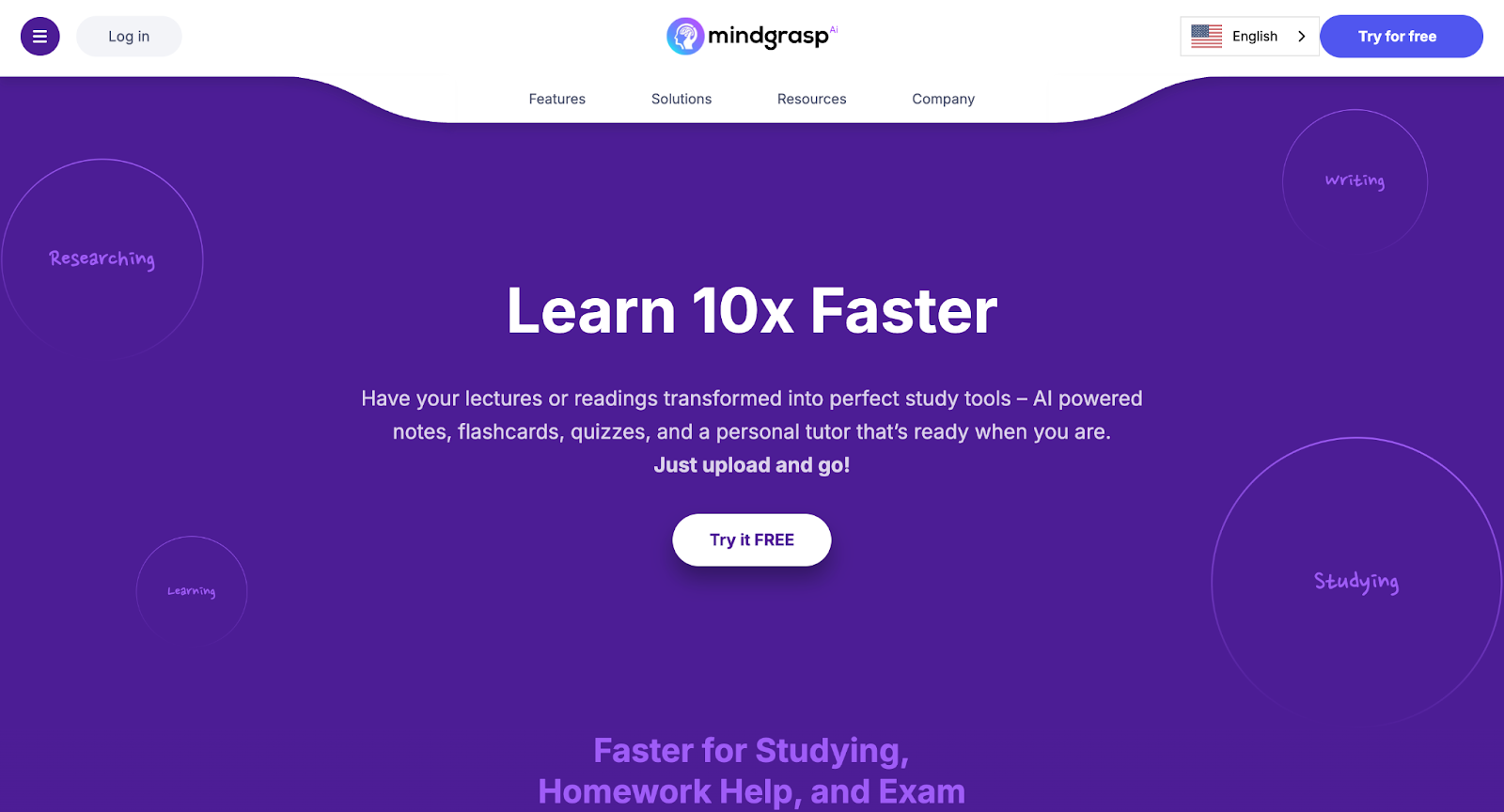
Mindgrasp is a powerful study assistant that goes beyond surface-level flashcards and quizzes to actually help you understand, retain, and work with your class material. While Knowt is great for quick review tools like flashcards and practice tests, Mindgrasp gives you the full study workflow — from converting raw lectures and readings, even large files like textbooks, into meaningful learning materials to answering complex questions and guiding your exam preparation.
What Mindgrasp Does:
- Auto-generate detailed notes and summaries from uploaded content.
- Create flashcards and quizzes that reinforce long-term memory with active recall.
- Ask targeted questions and get contextual answers based on your own study materials.
- Record and transcribe live or recorded lectures so nothing gets missed.
- Works across video, audio, and text formats for a unified study experience.
Main Benefits:
Many students find tools like Knowt helpful for memorization and quick practice, but they still struggle with deep comprehension, complex subjects, or managing large amounts of course content. Mindgrasp solves this by turning your raw sources into a complete learning ecosystem — structured notes, adaptive recall tools, and intelligent explanations all in one place.
- Brainscape
Adaptive flashcards designed for long-term memory
Brainscape is a flashcard-based study tool focused on helping students remember information more effectively over time. Instead of showing you cards at random, it uses a confidence-based system that adapts to how well you know each concept, so you spend more time reviewing what you struggle with and less time on what you already understand.
Brainscape works well as a study companion when your goal is memorization and recall, especially after you’ve already learned the material through lectures, readings, or other study tools.
Main Benefits:
- Confidence-based flashcard system that adapts to your knowledge level
- Ability to create custom flashcards or use pre-made decks
- Simple, distraction-free experience focused on repetition and recall
Best for:
Students who want a structured way to memorize and retain information long-term, especially for vocab-heavy subjects, formulas, or fact-based exams.
3. Anki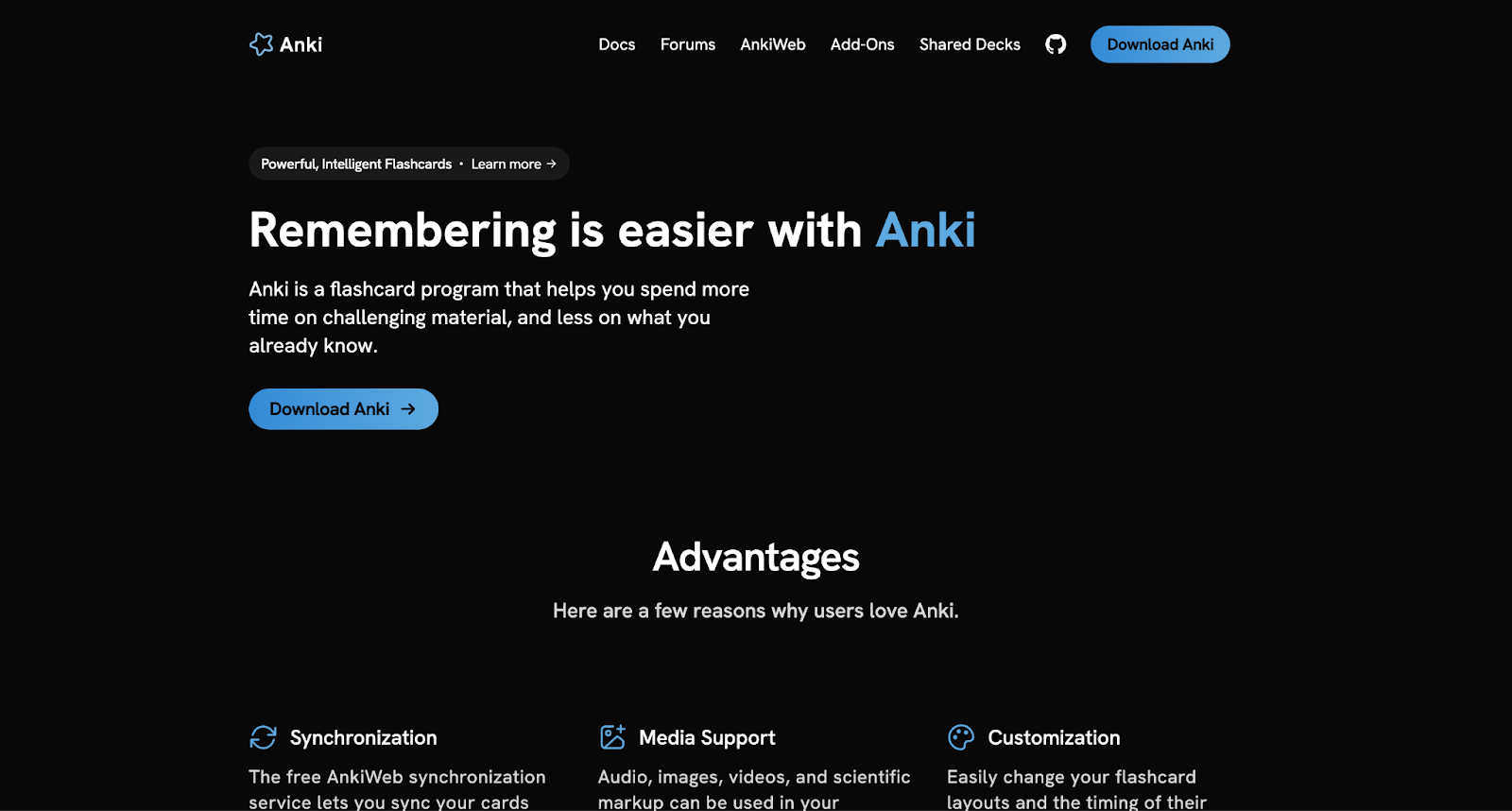
Custom spaced-repetition flashcards that help you remember more for longer
Anki is a super flexible flashcard app that uses spaced repetition — meaning it shows you cards right before you’re likely to forget them — so you can lock information into long-term memory instead of just short-term cramming. You build the decks yourself or download community decks others have made, and Anki schedules reviews in a way that actually works.
Main Benefits:
- Spaced-repetition system that adapts to how well you know each card
- Totally customizable flashcards with images, audio, cloze deletions, and more
- Works across devices so you can study on your phone, tablet, or computer
Best for:
Students who want full control over their flashcards and are serious about mastering material through repeated, optimized review — especially for language learning, med school memorization, formulas, and dense fact-based content.
4. Quizlet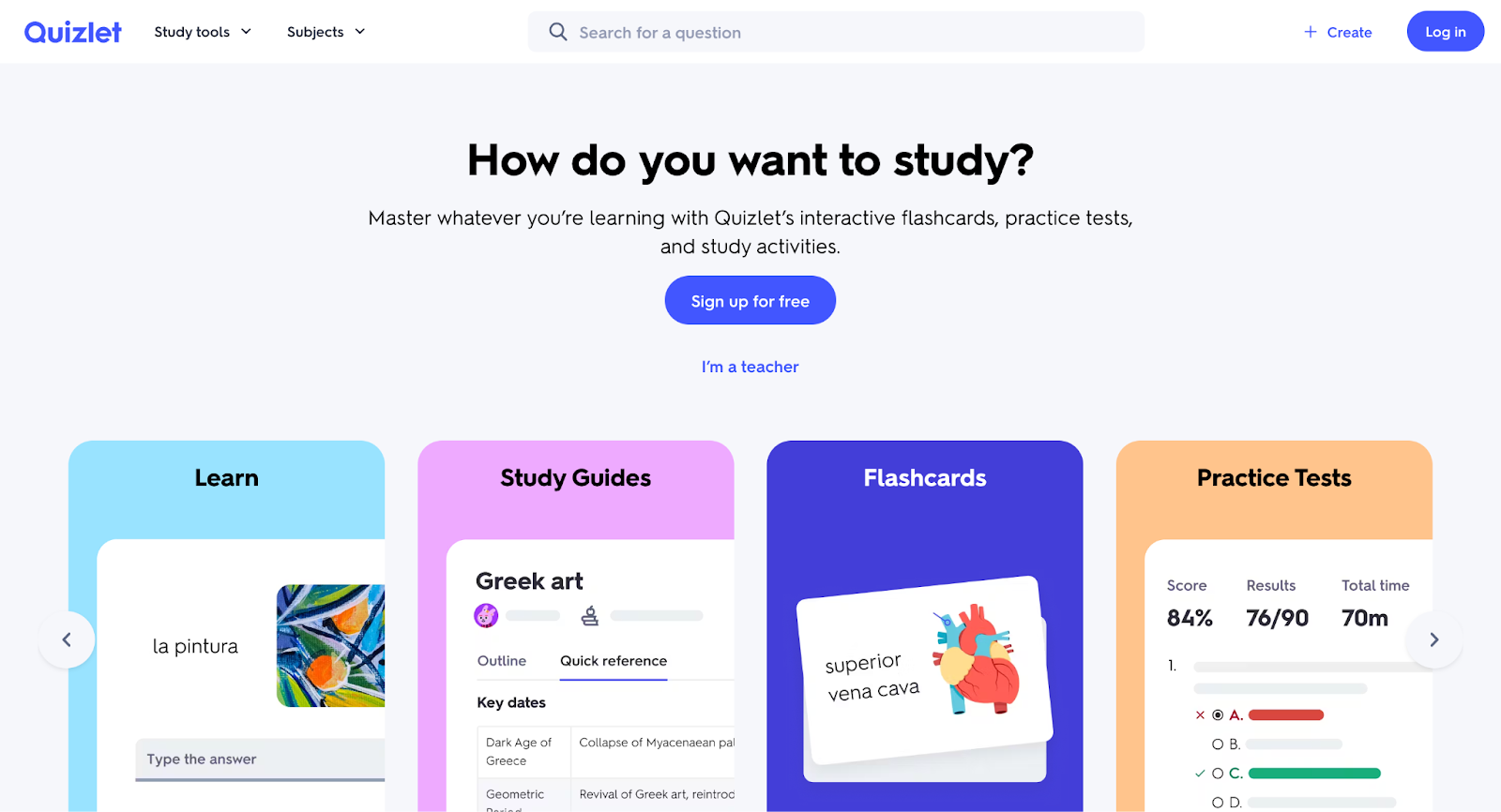
Simple flashcards and practice tools to help you review and memorize information
Quizlet is a study platform built around flashcards and self-testing, letting you create your own study sets or choose from tons of community-made sets. It focuses on repetition and quick practice, so you can lock in facts and concepts before exams. It doesn’t dig deep into explaining complex ideas, but it’s solid for reinforcing what you’ve already learned.
Main Benefits:
- Create or choose from a huge library of flashcard sets
- Practice with tests, matching games, and spaced-review modes
- Easy to use on mobile and desktop for on-the-go review
Best for:
Students who want an easy way to review definitions, terms, formulas, and basic concepts through repeated practice, especially after they’ve already gone through lectures or explanations elsewhere.
5. Perplexity AI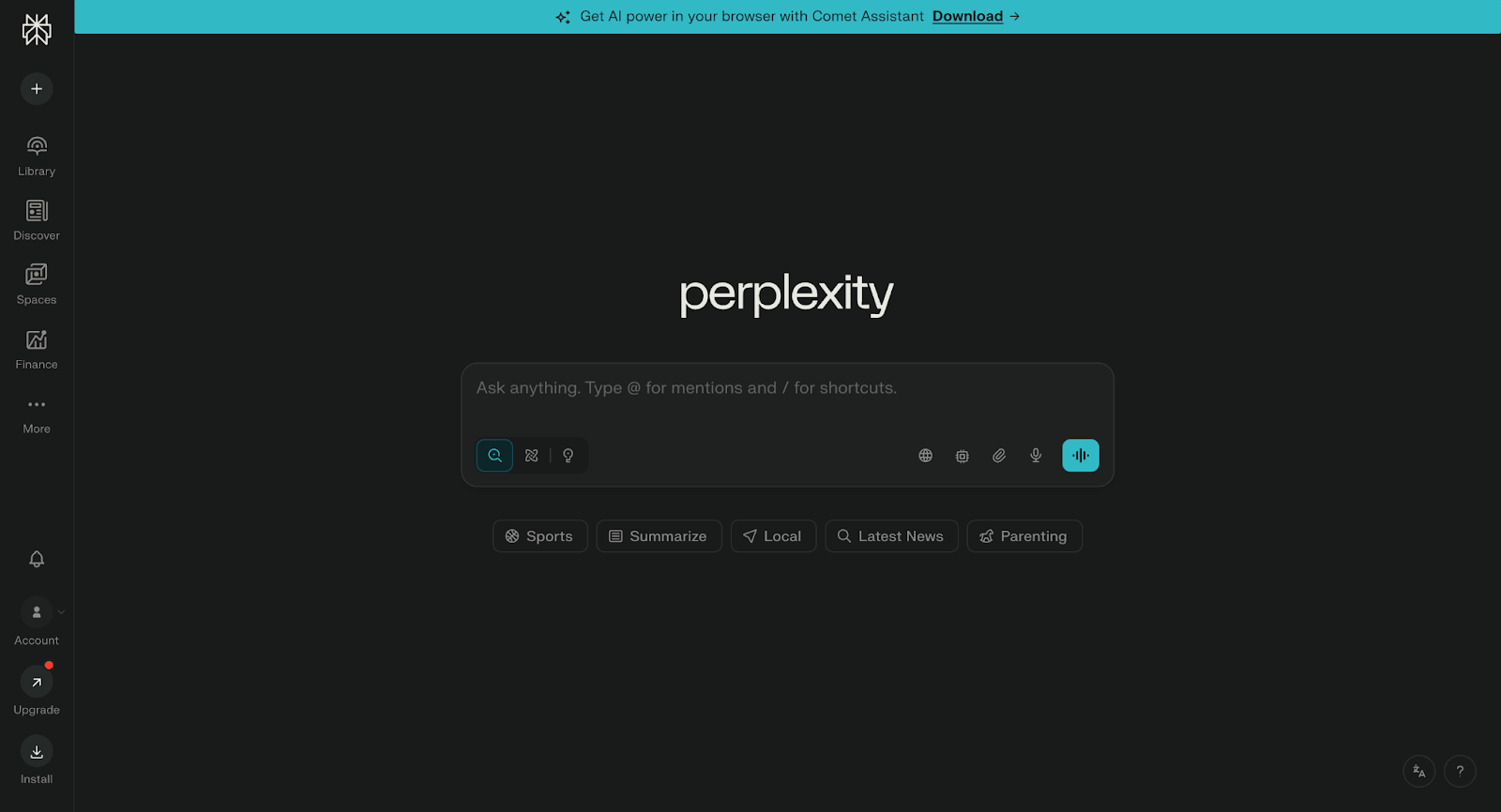
Fast, source-backed answers for research and complex questions
Perplexity AI is a search-style AI tool that gives you quick explanations and information with visible sources and context. Instead of just generating generic text, it pulls from real articles and web pages so you can see where the answers are coming from, which is helpful when you’re researching topics, checking facts, or trying to understand something in depth. It doesn’t build full study sets like flashcards or quizzes on its own, but it’s great for getting reliable answers fast when you need clarity.
Main Benefits:
- Provides AI answers with transparent source context
- Great for research, brainstorming, and deep-dive questions
- Quick and easy to use when you want clear explanations
Best for:
Students who need trustworthy, sourced answers while researching essays, papers, or complex topics — especially when you want context and reference visibility as part of your study process.
6. NotebookLM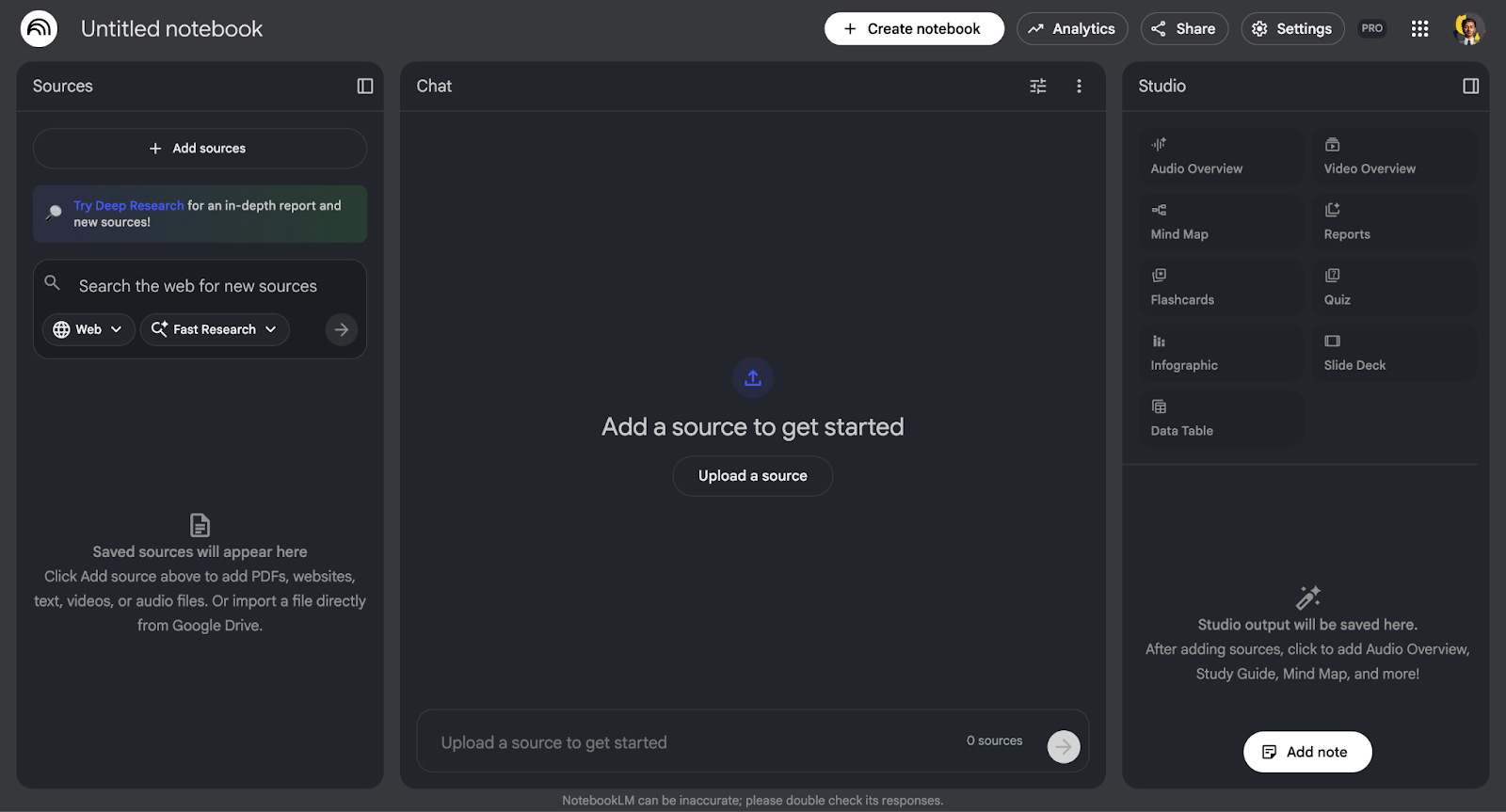
Your AI-powered research and study notebook from Google
NotebookLM is an experimental tool from Google that helps you turn your notes and uploaded documents into an interactive AI study resource. You can upload PDFs, lecture notes, articles, or other files and then ask questions about them in plain language. It’s like having a study partner that knows your materials and can help you explore, summarize, and recall the key points — making research and review faster and less painful.
Main Benefits:
- Ask questions directly about your uploaded materials and get contextual AI responses
- Generate summaries, outlines, and explanations based on your own documents
- Helps you organize and navigate through complex readings or study content
Best for:
Students who want an easy way to interact with their own notes and materials — turning a pile of readings into a searchable, conversational study tool that helps with research, comprehension, and review.
- ChatPDF
Turn your PDFs into an AI study partner
ChatPDF is a tool that lets you upload PDF documents — like textbooks, lecture slides, research papers, or articles — and then chat with them. Instead of reading page by page, you can ask questions in natural language and get answers based on the content of the PDF. It’s a quick way to pull out key ideas, clarify confusing sections, and use your actual materials as the basis for study help.
Main Benefits:
- Ask questions about any uploaded PDF and get AI responses tied to the document
- Generate summaries and explanations of specific sections
- Makes long or complex PDFs easier to digest without re-reading everything
Best for:
Students who work with lots of readings, articles, or long PDFs and want a faster way to extract key points, clarify meaning, or review content without manually combing through pages.
Why Mindgrasp Is the #1 Knowt Alternative
At the end of the day, the biggest difference comes down to how completely a tool supports the way students actually study. While many tools on this list are great at one specific thing — flashcards, PDFs, research answers, or practice — Mindgrasp brings everything together into a single, cohesive study workflow.
Instead of jumping between tools for notes, flashcards, quizzes, lectures, and explanations, Mindgrasp handles all of it in one place. You can upload lectures, readings, videos, or links, ask real questions about your material, and get study resources that are built to help you understand and retain what you’re learning — not just review it.
That’s why Mindgrasp consistently stands out as the best alternative to Knowt. It’s not just about memorization or speed. It’s about clarity, confidence, and actually feeling prepared when exams or assignments roll around.
Bottom line:
If you want a study tool that goes beyond flashcards and helps you truly learn the material from start to finish, Mindgrasp is the strongest all-around choice.